Maintaining personal transportation, commercial fleets, and recreational watercraft requires a strategic approach to asset management. Modern machinery relies on complex electronic systems, high-tensile materials, and specialized engineering that demand qualified technical care. Partnering with the wrong service provider leads to unnecessary downtime, inflated repair costs, structural safety compromises, and accelerated depreciation.
Choosing the right service provider involves evaluating technical certifications, facility capabilities, labor warranties, and industry reputations. Whether you need routine maintenance, major structural restoration, or custom modifications, having a structured framework for vetting service shops ensures your investments remain safe, operational, and valuable over time.
I. Auditing Specialized Automotive Care and Customization
Finding a reliable repair or modification shop requires looking beyond marketing claims and evaluating technical credentials, diagnostic infrastructure, and operational practices. Modern vehicles feature complex controller area network (CAN bus) architectures, advanced driver-assistance systems (ADAS), and specialized metallurgy that require precise calibration and tools.
Key Certifications to Verify Before Handing Over Your Keys
Evaluating a shop begins with verified technical certifications. Industry qualifications demonstrate that technicians undergo continuous training and adhere to standardized repair procedures:
- ASE (Automotive Service Excellence) Certifications: Look for shops employing ASE-certified technicians, particularly those holding Master Technician status or advanced certifications in engine performance, electrical systems, and light-duty diesel.
- Manufacturer Factory Authorizations: Dealership alternative shops should hold current manufacturer-specific credentials, ensuring access to proprietary diagnostic software, technical service bulletins (TSBs), and specialized tooling.
- I-CAR Gold Class Recognition: For collision and structural work, this designation confirms ongoing training in modern materials like high-strength steel, aluminum alloys, and composite bonding.
- Facility Organization and Tooling: Inspect the shop floor. Clean, well-organized work bays with modern hydraulic lifts, dedicated diagnostic stations, and organized specialty tools indicate professional standards.
Ask direct questions regarding warranty policies before authorizing work. A reputable facility offers a minimum 12-month or 12,000-mile parts and labor warranty, with premium shops extending coverage to 24 or 36 months nationwide through network partnerships. Verify whether the shop uses Original Equipment Manufacturer (OEM) parts, high-grade Original Equipment Supplier (OES) parts, or lower-tier aftermarket components.
Evaluating Custom Builders for Performance and Aesthetic Upgrades
Customizing a vehicle requires balancing aesthetic goals and performance upgrades with long-term reliability and structural integrity. Selecting an auto modification shop involves checking their experience with your specific vehicle platform and verifying their technical capabilities.
When auditing a custom facility, examine their past projects with a focus on electrical integration and structural fabrication. Custom wiring harnesses should use marine-grade or automotive-grade braided loom, heat-shrink weather-sealed connectors, and dedicated fuse blocks rather than Scotch-Lok taps or exposed splices. For suspension lifts, lowering kits, or chassis reinforcement, confirm that the shop performs complete alignment geometry corrections, including roll center adjustments, bump steer mitigation, and recalibration of steering angle sensors and ADAS cameras. Red flags include shops that bypass factory safety monitors, use sub-standard structural welding, or lack in-house dynamic alignment and diagnostic equipment. Call an auto modification shop today for support.
II. Navigating Emergency Recovery and Collision Management
Vehicle emergencies, whether roadside breakdowns or multi-vehicle collisions, require immediate decisions under high-stress conditions. Establishing a protocol for emergency dispatch and collision recovery protects both human safety and financial interests.
Protocols for Assessing Immediate On-Scene Safety and Medical Priorities
When an incident occurs on a roadway, immediate safety protocols take priority. Drivers must secure the scene by moving operational vehicles to the shoulder, turning on hazard flashers, and placing reflective markers if available. Assessing occupant safety is the immediate next step.
When a collision involves a car accident injury, securing immediate emergency medical response is critical. Beyond immediate life safety, complete medical documentation established right after the event forms the baseline for insurance coverage and personal injury claims. Internal trauma, soft tissue damage, and concussions often present delayed symptoms; immediate evaluation ensures medical records clearly link physical conditions directly to the incident.
Criteria for Selecting Equipment-Qualified Towing Operators
Standard light-duty flatbeds are designed for passenger cars, but commercial rigs, construction equipment, buses, and loaded box trucks demand specialized recovery equipment. Attempting to move heavy assets with undersized equipment can cause severe frame twisting, drive-line damage, or catastrophic rollover accidents during recovery.
When dispatching heavy duty towing services, verify that the operator maintains the correct class of recovery vehicles:
- Integrated Rotator Booms: Heavy recovery cranes capable of 360-degree rotation with lifting capacities from 40 to 75 tons, necessary for complex uprights and off-road extractions.
- Class 8 Underlift Units: Equipment designed to lift commercial rigs by the axle or tire frames, protecting fiberglass front ends and steering linkages from damage.
- Lowboy and Heavy Haul Trailers: Specialized multi-axle trailers capable of moving disabled heavy machinery without exceeding legal height and bridge weight limits.
- Regulatory Compliance: Confirm the operator holds proper DOT authority, state permits for oversized loads, and adequate liability and cargo insurance coverage for high-value commercial assets.
III. Streamlining Commercial Fleet and Heavy Equipment Repairs
Commercial fleet management relies on minimizing unexpected downtime, maintaining Department of Transportation (DOT) compliance, and controlling the total cost of operation. Achieving these goals requires structured preventative maintenance and qualified service partners.
Establishing Preventative Maintenance Schedules for Heavy Haulers
Unscheduled downtime on commercial transport directly hurts revenue and risks customer contract penalties. Preventative maintenance (PM) programs should run on strict mileage, engine-hour, or calendar intervals, rather than waiting for component failures.
Partnering with an experienced semi truck repairs specialist allows fleet managers to implement comprehensive inspection protocols covering major mechanical systems:
- Air Brake Systems: Regular inspection of brake drum thickness, shoe friction material, automatic slack adjusters, air compressor output, and system moisture purges.
- Powertrain and Drivetrain: Scheduled oil sampling and fluid analysis for engines, transmissions, and differentials to detect premature bearing or gear wear before catastrophic engine failure occurs.
- Emissions Equipment: Scheduled cleaning and testing of Diesel Particulate Filters (DPF), Selective Catalytic Reduction (SCR) systems, and EGR valves to prevent derate conditions and maintain EPA compliance.
- Chassis and Suspension: Inspecting kingpins, leaf springs, air bags, torque arms, and steering linkages for wear that impacts directional stability and tire wear.
Auditing Comprehensive Service Centers for Combined Rig Maintenance
Evaluating a commercial service facility requires assessing physical infrastructure and technical capacity. High-capacity facilities should feature drive-through bays with minimum clearances of 14 feet to handle loaded trailers and high-roof tractors.
A qualified truck repair shop must feature heavy-duty diagnostic equipment capable of reading proprietary fault codes across major engine platforms, including Cummins, Detroit Diesel, PACCAR, and Volvo. Facilities should maintain overhead crane systems, high-capacity hydraulic press tools, and dedicated wheel alignment racks designed for multi-axle configurations.
Ensuring Integrated Care for Towing Assemblies and Cargo Systems
A commercial transport rig consists of two distinct mechanical systems: the prime mover and the trailing unit. Servicing the tractor while neglecting the trailer compromises highway safety and operational productivity.
Work with a qualified truck and trailer repair facility that provides integrated service across both units. Trailer maintenance protocols must address:
- Fifth Wheel and Kingpin Integrity: Measuring jaw play, checking top-plate flatness, and inspecting mounting hardware for fatigue cracks.
- Trailer Suspension and Axles: Servicing slider mechanisms, air-ride leveling valves, wheel end bearings, and hub-odometers.
- Cargo Door and Floor Structures: Inspecting roll-up door cables, side curtain tensioners, and floor cross-members for corrosion or structural fatigue.
- Electrical and Lighting Circuits: Testing 7-way harness connectors, ABS wheel sensors, and perimeter LED marker networks for continuity and ground fault issues.
IV. Buying, Maintaining, and Servicing Recreational Watercraft
Marine environments subject assets to constant moisture, salt corrosion, UV degradation, and unique structural stresses. Proper watercraft care requires specialized marine technical expertise that differs significantly from automotive maintenance.
Evaluating Build Quality and Dealer Support for Marine Purchases
Purchasing marine vessels requires careful evaluation of structural design and manufacturer construction techniques. Hull construction, transom reinforcement, and aluminum welding quality determine how a vessel performs under rough water conditions and long-term storage stress.
When inspecting new pontoon boats at a dealership, evaluate the structural engineering details before finalizing a purchase:
- Tube Construction: Check pontoon log diameter, wall aluminum thickness (typically 0.080 to 0.100 inches), baffle placement inside multi-chamber logs, and full-length keel guard extrusion welds.
- Cross-Member Spacing: Look for heavy-duty Z-bar or C-channel cross-members mounted on 16-inch centers (or 12-inch centers for high-horsepower performance packages) to minimize deck flex.
- Transom Assembly: Ensure the engine mounting transom is fully integrated into the stern structure with heavy-gauge aluminum bracing rather than bolted light-duty brackets.
- Underdeck Performance Shielding: Check for aluminum skinning underneath the deck, which reduces water drag against cross-members and improves fuel efficiency and speed.
Selecting Certified Marine Technicians for Engine and Hull Integrity
Marine engines operate under continuous high load, comparable to driving a truck uphill continuously. Selecting a marine facility requires verifying factory certifications for marine engines (such as Mercury Marine, Yamaha Outboards, Suzuki, or Volvo Penta) and inspecting their hull restoration capabilities.
V. Managing Vehicle Lifecycle, Asset Depreciation, and Collision Recovery
Managing automotive assets over their lifecycle involves knowing when to invest in major structural repairs and when to retire a severely compromised or high-mileage asset. Correct technical evaluation prevents throwing good money after bad.
Standards for Structural Realignment and Paint Matching
Restoring a vehicle following a collision requires returning the structural frame and exterior finishes to factory specifications. Unibody and full-frame structures must be aligned using computerized three-dimensional measuring systems that compare damaged vehicle dimensions against original manufacturer blueprint data down to the millimeter.
When choosing a facility for auto body repair, verify that the shop utilizes multi-stage down-draft paint spray booths that heat-cure finishes in dust-free environments. The shop should use computerized color-matching spectrophotometers to adjust for paint fading on older panels, blending adjacent panels to ensure a seamless finish. Inquire about underlying corrosion protection treatments, ensuring that ecoat applications, cavity waxes, and undercoatings are reapplied to match factory rust prevention levels.
Determining the Total Loss Threshold and Exit Strategies
Every vehicle eventually reaches a point where repair costs outweigh market value, or where structural damage prevents safe restoration. Calculating this threshold involves weighing repair estimates against the vehicle’s actual cash value (ACV) prior to the loss event.
Most insurance carriers declare a total loss when repair costs plus salvage value reach 70% to 80% of the vehicle’s market value. However, safety factors—such as compromised pillar structures, severe frame rail buckling, or flooded electrical harnesses—can make a vehicle unsafe to rebuild regardless of cost.
When faced with a total loss, an unrepairable vehicle, or an aging car with a blown engine or transmission, finding an immediate liquidation path saves money on storage fees and administrative headaches. Transacting with a reputable car for cash service provides a quick route to sell non-running or damaged vehicles, turning a liability into liquid capital that can be reinvested into a reliable asset.
Service Provider Evaluation Checklist
Before signing a work order or handing over a deposit for vehicle or marine service, run through this final audit checklist:
- Written Estimates: Demand a detailed itemized estimate breaking down parts pricing, labor hours, shop supply fees, and environmental charges before work commencement.
- Parts Authorization: Ensure the shop contract explicitly requires your written approval before installing any substituted parts or exceeding the original estimate by more than 10%.
- Old Parts Retention: Request that removed components be retained for your inspection upon job completion, verifying that replacement was necessary.
- Insurance and Bonding: Confirm the facility holds garage-keepers liability insurance to protect your property against fire, theft, or accidental damage while on their premises.
- Documentation: Ensure all completed services are logged with clear mileage, engine hours, and technical notes to preserve vehicle resale value and manufacturer warranty validity.
Using This Guide for Vehicle and Boat Repairs
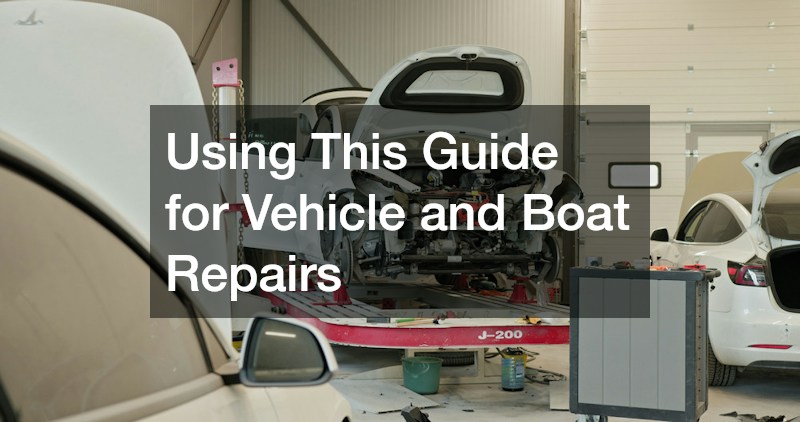
Navigating the vehicle and marine service industry requires careful vetting, technical verification, and clear communication. Treating vehicle service as an investment strategy rather than a reactive fix helps keep your machinery operational, protects human safety, and preserves resale value.
By evaluating certifications, facility equipment, and technical expertise before emergencies occur, you build a network of trusted specialists across automotive, commercial, and marine sectors. Proactive maintenance and informed service choices ensure your cars, commercial fleets, and watercraft perform reliably for years to come. Call an auto and marine repair professional today.