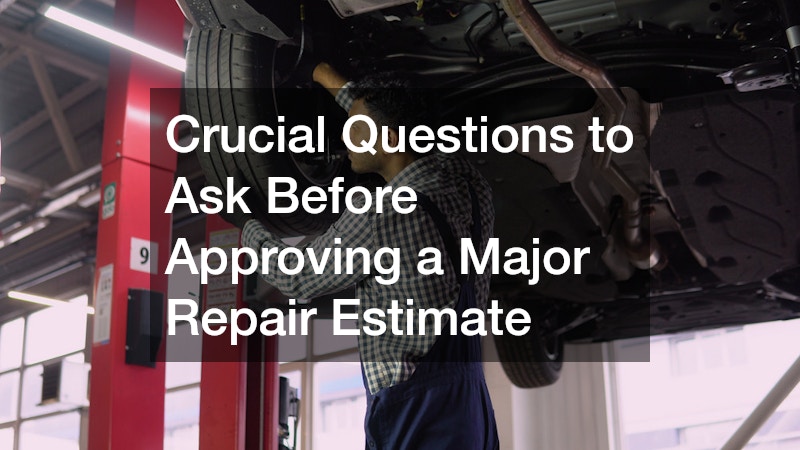
Facing an expensive, unexpected repair estimate can leave any property or vehicle owner feeling vulnerable and overwhelmed. Whether you are dealing with a vehicle damaged in a sudden collision, an emergency entryway system failure at your home, or severe structural damage across your driveway and access aprons, high-stakes repair estimates demand careful scrutiny. Too often, consumers feel pressured to sign authorization forms quickly, only to face surprise labor surcharges, poor-quality replacement components, or incomplete repairs down the road.
Approving an estimate should never be a passive sign-off or a leap of faith. It is a legally binding agreement that dictates the scope, cost, quality, and timeframe of the restoration process. By taking a methodical approach and asking targeted, precise questions about material sourcing, labor breakdowns, liability releases, and warranty protections, you maintain complete control over your project. Taking time to vet every line item safeguards your financial investment, ensures physical safety, and holds contractors and service providers to the highest standards of accountability.
Demanding Line-Item Transparency on Structural and Collision Work
When presented with a major restoration or collision estimate, your first priority must be achieving total clarity on every dollar listed. Service advisors often group complex tasks into broad, confusing category totals that obscure the true cost of labor, materials, and specialized equipment usage. To protect your budget, insistence on a fully itemized breakdown is non-negotiable before granting written authorization.
Start by asking the shop to separate specialized labor hours from raw material fees. Structural frame straightening, computerized alignment scans, paint booth operating hours, and manual body panel fitting carry vastly different hourly labor rates. Demanding an itemized list allows you to spot inflated charges, such as overlapping labor fees where two related tasks share the same teardown steps. Additionally, ask directly about hidden fees, such as hazardous material disposal charges, shop supply markups, or administrative processing surcharges. Knowing these details upfront prevents unexpected additions to your final invoice.
It is equally essential to clarify how the facility handles unforeseen structural complications uncovered during teardown. In complex vehicle restorations, removing damaged outer panels frequently reveals compromised inner unibody supports or hidden electrical harness damage. Ask the service manager to explain their exact supplemental estimate process: How will they document newly discovered damage? Will they send clear digital photography and diagnostic scan logs before proceeding? Setting clear communication expectations ensures no additional work occurs without your explicit, written approval.
When evaluating complex structural work, including auto body repair, demanding clear proof of technician certifications and facility equipment capabilities ensures your project is handled safely. Furthermore, confirm whether the shop utilizes original manufacturer structural components or alternative aftermarket options when sourcing auto parts. Asking these detailed questions upfront establishes clear boundaries, holds service teams accountable, and guarantees that structural safety is never compromised for profit margins.
- Request a complete line-item estimate: Require the service advisor to walk through every written charge, detailing specific labor hours, painting fees, and replacement component costs individually.
- Establish supplemental authorization rules: Mandate in writing that the facility must obtain explicit digital approval with photographic proof before performing any work outside the original estimate.
- Inspect pre-repair diagnostic logs: Ask for written copies of digital scanning reports to confirm existing electrical, sensor, or structural frame alignment issues before tear-down begins.
- Verify shop supply and fee caps: Inquire about flat-rate “shop supply” or “environmental disposal” surcharges to ensure they are calculated accurately and not applied as arbitrary percentage markups.
- Clarify frame-pulling and paint booth time: Ask how structural alignment and painting hours were calculated to verify that machine setup time is not billed twice across multiple tasks.
- Confirm structural measuring protocols: Inquire whether three-dimensional computerized measuring systems are used to verify that the unibody is restored to factory alignment tolerances.
- Audit paint blending procedures: Ensure the estimate details whether adjacent undamaged panels will be blended properly to match color tone without double-charging for clear coat applications.
Vetting Component Sourcing, Quality, and Warranty Protection

The overall longevity, performance, and safety of any mechanical or structural repair depend entirely on the quality of the replacement components used. When reviewing a major estimate, never assume that the technician plans to use factory-fresh, original components. Contractors and repair shops utilize a wide range of component grades, ranging from top-tier original equipment to reconditioned, salvaged, or low-cost third-party alternatives.
Asking pointed questions about component sourcing is critical for establishing performance expectations. Original Equipment Manufacturer parts are produced to the exact specifications of your original system, guaranteeing precise fitment, structural integrity, and long-term reliability. Conversely, aftermarket components vary wildly in quality; while some meet or exceed original standards, others utilize thinner metals, lower-grade plastics, or inferior internal gearing to reduce manufacturing costs. Request a clear breakdown of every component listed on your estimate, noting whether it is original, aftermarket, or remanufactured.
Component selection is especially vital when repairing automated entryway infrastructure and heavy structural overhead portals. If your facility or residential property requires specialized garage door repair, ensuring that heavy-duty torsion springs, steel lifting cables, and track brackets match your door’s exact weight rating is essential for preventing sudden cable snaps or track derailments.
Similarly, replacing a damaged garage door opener requires asking specific questions about motor horsepower, drive-mechanism durability (chain versus belt drive), and security encryption standards to protect against signal interception. Always pair component vetting with direct inquiries about warranty coverage, securing written guarantees on both the physical hardware and the technician’s labor hours.
- Specify component origin in writing: Ask the shop manager to identify whether every line-item component is original manufacturer equipment, certified aftermarket, or reconditioned stock.
- Review warranty terms on labor and hardware: Request written documentation detailing the duration and limitations of both component warranties and the shop’s labor guarantee.
- Inquire about weight and duty ratings: Ensure replacement hardware, springs, and drive mechanisms match or exceed the exact load specifications of your existing system.
- Verify digital security and safety features: When replacing automated drive motors, confirm that safety auto-reverse sensors and rolling-code security protocols are fully integrated.
- Ask about lead times and backorders: Confirm that all listed replacement components are currently in stock or readily available to avoid prolonged operational downtime.
- Inspect refurbished component standards: If remanufactured mechanisms are suggested, ask whether critical wearable internal gears and bearings were completely replaced with new components.
- Clarify cross-shipment exchange terms: Determine whether damaged core components carry credit refunds that should be subtracted directly from your final parts tally.
Protecting Property Boundaries, Drainage, and Site Surface Integrity
Major repair projects often extend beyond mechanical systems and building structures to encompass exterior grounds, access driveways, and surrounding property boundaries. Heavy machinery, construction equipment, or environmental wear can severely damage paved surfaces, leading to structural cracking, water pooling, and rapid surface degradation if repairs are improperly planned or executed.
When evaluating surface restoration or driveway repair estimates, asking targeted questions about material specifications and sub-base preparation is essential. The longevity of paved surfaces relies heavily on what lies beneath the visible surface layer. Inquire about the depth and compaction rating of the aggregate base course: Has the sub-grade been mechanically compacted to prevent future settling and surface rutting? Ask about the specific asphalt mix design being used, verifying whether it is a coarse binder course intended for heavy load-bearing or a fine surface mix designed for smooth water shedding.
Drainage control is another critical area requiring rigorous inquiry during exterior structural evaluations. Improperly graded surfaces cause rainwater to pool along building foundations, accelerating structural decay and undermining underground footings. When restoring large paved surfaces using commercial asphalt, verify that the crew will maintain a minimum two percent slope away from structural walls to ensure efficient runoff toward storm drains.
Furthermore, ask how edge boundaries will be secured; installing a properly poured, reinforced asphalt curb along property lines or garden beds prevents edge raveling, prevents soil erosion, and protects structural pavement borders from crumbling under heavy vehicle loads. Asking detailed questions about compaction density, mix temperatures, and drainage pathways ensures your exterior surfaces withstand heavy traffic and harsh weather conditions for years to come.
Navigating Third-Party Insurance Claims and Legal Rights

When major repairs result from vehicular collisions, natural disasters, or third-party property damage, approving an estimate involves complex legal and financial considerations. Insurance adjusters often attempt to push low-ball estimates, recommend cut-rate repair facilities, or insist on budget components to minimize corporate payouts. Navigating this process requires a firm understanding of your legal rights before signing any repair agreements or settlement releases.
One of the most critical questions to ask is whether your signature on an estimate or work authorization form waives your right to pursue supplementary claims. In many damage scenarios, initial assessments only capture visible surface harm. Once structural disassembly begins, hidden frame twisting, suspension misalignment, or electrical harness damage is frequently uncovered. Ensure that your repair authorization explicitly preserves your right to file supplemental insurance claims for hidden damage discovered during the restoration process.
Navigating complex insurance disputes, liability denials, or personal injury claims often requires professional legal advocacy to protect your financial interests. Consulting a seasoned car accident lawyer ensures that insurance companies do not force you into accepting substandard repairs, unauthorized aftermarket parts, or inadequate total-loss valuations.
Similarly, working with an experienced car accident attorney helps protect your legal right to pursue diminished value compensation—reimbursements that cover the inherent loss of market value your vehicle suffers simply by having a major accident history, even after flawless repairs are completed. Never sign blanket legal releases or insurance settlement checks until your legal team has reviewed the final repair work and confirmed that all structural, financial, and medical liabilities have been fully addressed.
Establishing Repair Timelines, Loaner Protocols, and Work Guarantees
Beyond component choices, paving specifications, and insurance negotiations, the operational efficiency and reliability of your service provider play a massive role in your overall repair experience. Approving an estimate requires establishing clear expectations regarding project timelines, progress updates, labor qualifications, and post-repair quality assurance checks.
Start by asking for a firm, written target completion date. While supply chain disruptions or backordered hardware can occasionally cause unavoidable delays, establishing a clear baseline timeline holds the shop accountable. Ask what temporary accommodations are provided if the project extends past the agreed date: Does the facility provide loaner vehicles, rental reimbursements, or temporary access solutions? Knowing these logistical details upfront minimizes personal and professional disruptions while your primary equipment or property is out of service.
Vetting the service team’s technical credentials is another essential step in the estimate approval process. When dealing with complex mechanical systems, fuel injection electronics, or unibody alignment, asking about technician certifications ensures your job is handled by experienced professionals. Inquiring whether your work will be performed by an independent local mechanic holding ASE (Automotive Service Excellence) or I-CAR certifications guarantees high technical standards.
Similarly, when managing structural property access, automated security gates, or garage door services, confirming that field technicians are factory-trained and fully insured against accidental property damage provides invaluable peace of mind. Finally, mandate that a comprehensive post-repair inspection—including road testing, diagnostic scans, and operational stress checks—is performed before final payment is rendered.
Protecting Your Investment Through Informed Approvals
Approving a major repair estimate should never be an impulsive decision made under pressure. Whether you are dealing with structural bodywork, complex electrical systems, exterior paving, or automated property entries, taking a proactive, informed approach puts you in complete control of the restoration process. Asking detailed questions about line-item costs, component sourcing, drainage grading, insurance claims, and technician credentials transforms a potentially stressful ordeal into a structured, transparent transaction.
Before signing any authorization document, review your notes, verify all verbal promises are put in writing, and ensure every line item makes practical sense. Demanding complete transparency, securing firm warranty commitments, and understanding your legal rights safeguards your personal safety, protects your hard-earned financial resources, and guarantees that your property or vehicle is restored to its peak operational condition. Empowering yourself with knowledge today ensures lasting peace of mind long after the final repair invoice is paid.